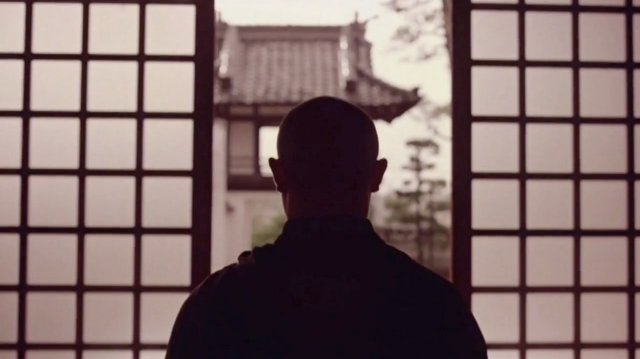
Denying the Truth about Oneself

SufferingPrayer

Each one of us has a personal hell, a region of fears, inferiority feelings, self-loathing and hidden shame, and of course we are all compensating for it in our own ways. This personal hell is different in everyone, but everyone has one.

Most of us who are on the path of awakening are avoiding this truth, the truth about our own personal hells, about what we feel, about what we fear we are – and are not.  Not only that but we, almost without exception, come to attribute the noblest of motives to our avoidance. We have convinced ourselves that, by the transcendence of our egos and theavoidance of our shadow material we are saving the world.

However nothing could be further from the truth. In our avoidance of our own personal Hells, in our determination to go around them rather than through them, in our determination to transcend our egos rather than transform them, we are snatching defeat from the jaws of victory. By the collective avoidance of our shadow material we are dooming not only ourselves but the world.

Most of what we are taught by the wisdom traditions is true, but it is not complete. We are taught that our ego is our enemy, and we must transcend it and live in the sanctified stratosphere of the Self. However this is an archaic prescription. It is pre-psychological. Psychotherapy has given us some tools to transform our egos, thus obviating the necessity to simply transcend them.

The problem with most psychotherapies however is that they are conceived and held in the Newtonian model of reality and the medical model of disease, where materialism and linear, rational thought are the order of the day. The nondual, nonlocal, atemporal, and simultaneous realm of consciousness is completely unrecognized.

Now, more than ever, we still need therapy – we still need transformation rather than transcendence. However we need the right kind of therapy, a therapy of the new paradigm, a quantum therapy, a therapy of consciousness, an enlightenment therapy.

PsychoNoetics is that therapy.

Its goal, its criterion of success is not social adjustment, relative sanity, “mental health”, freedom from psychological symptoms or any of the other “old paradigm” definitions. Instead its criterion for success is unconditional enlightenment, staying present in your real identity as witnessing consciousness, calm clear and peaceful, at all times and in all circumstances.

With PsychoNoetic clearing it is now possible to not only gain insight into the shadow material of your ego, but to let it go, to completely disassemble it. It is now possible to release your memories, let go of your attachments, clear your emotions, deconstruct your belief systems, accept instead of deny and connect in love instead of separate in ego. In this way you can transform your personal hell into a universal heaven.

Dr. Jeff Eisen

Posted in Uncategorized | Leave a comment

Psychonoetic Clearing – A Testimonial

Hello Everybody, here is a testimonial on PsychoNoetic Clearing. Make sure to sign up to our mailing list http://eepurl.com/bki9SL And don’t forget to subscribe to our Youtube Channel

Posted in blog | Tagged , , , | Leave a comment

Where Do We Rest?

Where Do We Rest?
Where Do We Rest?

We would do well to start all spiritual investigations and most psychological ones, whether of ourselves or of others, with the question, where do we rest? When there is nothing that we are doing, nothing we have to do, where do we rest? In other words, what is our customary experience of ourselves? This is not only the most central question of all; it is the most profound, and the answer is the most revealing!

Resting in unrest

First, ask yourself the question, do you rest at all? Many of us are usually in a condition of unrest, of having something urgent to do, some wrong to right. And usually, though we may not admit it, we fear there is something terribly wrong with ourselves.

Look at what you are feeling when you’re not doing anything. Are you at rest, or are you feeling driven – to do something, to change something – ultimately to change who you are, to be someone else?

Also, consider what things you do when you are feeling this way? What things do you do when you want be resting? Do lists of shoulds arise unbidden in your mind? Do you worry, obsess, make plans or at least lists, clean the house or argue?

And, for that matter, what things do you do to rest? Do you drink, smoke marijuana, take tranquilizers, overeat, veg out in front of the TV, jog, or have sex?

Resting in a belief system

Most of us, when we rest, rest in a belief system. Within this belief system we become all right and let ourselves rest only when we have fulfilled its conditions, when we have gotten the grades, lost the weight, gotten the job, made the money, married the person, gone to church, got the house, mowed the lawn, accepted the social beliefs and in turn have become accepted by the society.

When we achieve all-rightness, or have at least accepted what it is to be all right, we make a position out of it, and we rest in that position. Once we have taken our position, we perceive from it and filter reality from it. Which, of course, means that we judge ourselves, evaluate others and even raise our children from it. As long as we’re in a belief system, there’s actually no way to proceed. We have to clear the belief system.

A question of identity

This question of where we rest is ultimately a question of identity. And identity, for most of us, emerges out of our beliefs about ourselves. Who would we be if we were free of any urgency, any compulsion to change something, particularly to change something about ourselves? Who would we be if we were free of any belief system and most of all, free of any belief that there is something wrong with us?

Ideally, when there is nothing to do, we would be resting in emptiness, in alert beingness, fully present in the present, de-void of any pain, uneasiness, anything that has to be remedied, any defense of our identity, any fear, anxiety or self-doubt, any voices in our head. We would be aware, but aware of nothing, of no-thing. For this awareness of no-thing is presence, is inner freedom, is inner peace, and is the gateway to the Self. This awareness of no-thing is the nondual state that spiritual teachers and nondual psychologists are talking about. It is the eternal now; it is presence. It is Christ consciousness and Buddha mind. It is the God within.

It is also our real Self, our ultimate identity.

When we rest in it, we are resting in a place other than our belief identity, our ordinary, personal identity, self-concept or ego.

The goal of any true transformational practice, whether spiritual or psychological, is to be able to rest – and when resting to rest in this nondual space. At the same time, because only resting in nonduality lets us see what positions we are holding, our transformational practices have to encompass the goal. For only when we let go to nonduality, to emptiness, can we notice what we have been (habitually) holding, what we have been resting in, and what we were doing to endure or avoid it. Paradoxically, it is only in emptiness that we have a place to stand in and to notice from. And only when we notice what we have been holding, can we let go of it.

So accessing nonduality and resting in it is the true goal of all spiritual practices, all forms of meditation, Advaidic inquiry, Yoga, chanting, spiritual music, Sufi whirling and the like. When they bring us nonduality, then and only then do we become aware of our usual states of being, feel the way they have been imprisoning our spirit and appreciate the desirability of letting them go!

The evolutionary dialectic of psychospiritual transformation, then, is to access emptiness, notice our usual states of consciousness by their absence, resolve to let go of them when they arise again, and by letting go return to emptiness. As this process is repeated time and time again, our consciousness spirals upwards, our belief identity unwinds and our real identity becomes realer. In addition, less of our time is spent in the former and more in the latter, until ultimately whenever we rest, we do so in nonduality.

When the final goal is reached, meditative practices and therapeutic techniques cease to serve any transformational purpose and can be reserved for maintenance. The practices are the means, never the end. Once the far shore is reached, the raft can be chopped up for firewood.

The selfless self

Resting in our true identity, in nonduality, in the selfless Self, is the starting point, the point of the origination for all true human endeavors, individual, collective, and even evolutionary. For if we are not in our true identity; we are not coming from truth. We are in a belief system, a position, a self-concept. We are in a false identity and anything that we say, think or do, whatever its merits, is a defense of that false identity, a compensation and a reaction. As such, it cannot be wholly true. Only when we build on the foundation of our true identity, do we build on reality, and only when we build on reality, can we build a viable personality, viable relationships, and a viable society.

Jeff Eisen, Ph.D.

Posted in blog, Omnius | Tagged , , , , , , , , , , , , | 2 Comments

The Self-Illuminated Human

The Self-Illuminated Human

Throughout human history, individuals and groups with awakening consciousnesses have been striving to break the code of the unconscious, to gain access to the locked programs of their unconscious minds and revise them, in other words – to take conscious control of their psychospiritual evolution.

The three great “consciousness-raising” traditions of the world, psychology, mysticism, and religion, have always been about this to some degree, however unconsciously and unwittingly. In the psychological tradition, this is part of the aim of psychotherapy, hypnosis, and psychoactive drugs. In the mystical tradition this is part of the aim of meditation and yoga. In the religious traditions, this is part of the connection with God. In this regard, PsychoNoetics and to an extent, other “clearing strategies” do not stand alone. They are recent efforts in a great lineage of awakening that will continue to evolve as long as humanity continues to evolve.


PsychoNoetics as a conscious, evolutionary tool

In as much as it breaks the code of the unconscious, PsychoNoetics is a revolutionary transformational paradigm in this great lineage of awakening. The, “technical” aspects of this new paradigm are auto-kinesiological diagnosis, and the clearing strategy itself. But utilizing these techniques with a sacred intention, rather than merely a medical or psychotherapeutic one, qualifies PsychoNoetics to stand as a (clearing) path, alongside the (meditative, devotional, inquiring and psychophysical) paths of Buddhism, Vedanta, Sufism, Gnostic Christianity, Kabbalah, and various, non-traditional spiritual teachings.

Psychonoetic clearing proceeds entirely as a conscious decision to let go. There are no principles to be learned, no identity to be assumed, no examples to be lived up to, no information or teachings to digest. All you need to do to access your real identity as pure consciousness is to understand that you are That, and to clear away the memories, thoughts, and feelings that are obstacles to that realization.

Noetic psychologist Alan Combs distinguishes between anabolic and catabolic spiritual paths. Anabolic paths essentially consist of creating or constructing a new state of consciousness (as in affirmations, visualizations, and guided meditations). Catabolic paths, on the other hand, consist of deconstructing customary or habitual states of consciousness and their contents, so that new levels of organization can spontaneously manifest themselves.

PsychoNoetics, intended as a Clearing Path, is catabolic, a path of deconstruction, (although it can be used to guide anabolic processes like affirmations as well). It frees us from illusion and facilitates the acceptance of the reality of What Is. True spirituality can only emerge from this acceptance.

A fundamental, philosophical division

PsychoNoetics heralds a turn in philosophic orientation for the entirety of Western society. Remember the questions that I posed earlier in the book? Why is it that science, experts, and external authorities have taken such a hold of us, and why are some of us rebelling against this? In previous chapters I have pointed the finger at some of our beliefs about reality, but another part of the answer lies with our unexamined philosophy. Consider this.

There is a fundamental philosophical division in the world, one with widespread moral and ethical implications, which unconsciously influence most of the helping professions that have a “psychological” basis, like education, religion, psychotherapy, and social work. They even influence our legal system. On one side of this divide, people believe in laws and systems of ethical and moral directives. In the west this is exemplified by the Judeo-Christian tradition and in the east by Confucianism. The existence of these directives on how to live an upright life, how to be a good person in society, come out of a belief we have to be told, be taught, and tell ourselves what to do and how to live. This could be characterized as the doctrine of the child human, the human who is perpetually in need of a parent or a parental society.

On the other side of this divide, people believe that all humanity possesses an essential state of being, which it is our mission to uncover and perfect throughout our lives. From this perfected state, wisdom and compassion in thought and action spontaneously emanate. This doctrine is exemplified in the East by the traditions of Taoism, Advaita, and Chan and Zen Buddhism. It could be exemplified in the esoteric reaches of the Judeo-Christian tradition as a state of grace.

This split is not often commented on, but I think it is the most central division in human thought and certainly the division most relevant to the conduct of our lives. It is the difference between being treated or treating ourselves as a child, on the one hand, and being treated or treating ourselves as an adult on the other. I don’t mean an adult plodding beneath the weight of obligations and responsibilities, but a mature being animated and illuminated by an inner light, an inner wisdom, an inner connection to “God”.


Where we are

People who have been brought up to believe that man is driven by directives tend to be authoritarian personalities, (i.e., polarly position themselves either in authority or subject to authority) and reify facts and directives. What is more, they do unto others as they do unto themselves, and they do unto themselves as they do unto others. That is, they direct themselves through beliefs, laws, and “shoulds” and, when they have the chance, they impose these “shoulds” upon all others who have the misfortune of coming under their authority: spouses, children, parishioners, employees, or subjects.

Institutions, whether they are governments, religions, armies, or businesses, are even guiltier of this than are individuals. Organized religions, almost without exception, have been the most flagrant abusers and beneficiaries of this pernicious tradition. This is a mindset that imprisons mankind.

On the other hand, people who believe that man can be driven by an inner light, a gradually revealed connection to some source of inner wisdom, love, and truth, are inherently as free as their authoritarian counterparts are in bondage.

Most of what passes for education, religious instruction, knowledge, and government by laws, etc., is driven by facts and directives. In some ways science has provided an even more convincing rationale for external directives than the existence of an authoritarian God. There are only a small minority of individuals, philosophies, and institutions who dissent, who are free from this most oppressive delusion.


Envisioning a self-illuminated humanity

We need to firmly ground an alternative body of thought and action on the vision of the self-illuminated human. Science, education, government, morality, and ethics, have not only to be recast in this light, but also reconceived in it. People for whom this viewpoint is natural, artists, poets, musicians, visionaries, free spirits and, of course, – mystics, must give up their roles as dissenters on the periphery of a bounded society. Instead, they need to come together in mutual affirmation to form an alternate core, a core of inner authority, a core of light, a core society to which people can come as they liberate themselves from authoritarianism. They must recreate our institutions, particularly our schools and churches, in this vision so as to create alternatives for our society and a starting point for our children.

The Clearing Path of PsychoNoetics is aligned with this vision of the self-illuminated human, and is, in fact, facilitating this vision. Learning, information, affirmation, no matter how true and how wise, even learning about the self-illuminated human, are not enough. Only by letting go of everything that we hold on to in the space that is our consciousness, can we come to our real identity, and realize our inner authority.


Enlightened self-interest

We are in a new age, a global ecology where everything and everyone is visibly interdependent with everything and everyone else, and where almost all information is a mouse-click away. In this total information environment we are fast realizing that our survival is dependent upon sustaining the global system that sustains us. We are realizing that humanity must put their individual differences and individual identities aside and cooperate towards common goals. For that, we need a higher consciousness, one that sees that our individual interests are inseparable from the interests of the whole. This is no more and no less than enlightened self-interest, a new Golden rule that says do onto the All as you would do onto yourself.

How can the Clearing Path of PsychoNoetics help bring forth this new realization? We can, of course, be educated to this viewpoint, and a certain amount of education is in order. In fact, it is essential. However, education alone will not shift our consciousness. There is within every one of us an inherited resistance, which, as I have said, derives from our inescapable identification with our physical body and its survival. Identification with our body, inclines us towards an equally vulnerable and separated identification with our self-image.

This fundamental, survival urge drives most competitive human behavior. It is an evolutionary heritage that must be overcome or at least put into perspective, in order for new patterns of human response-ability to emerge. Clearing practices loosen our identity with our bodies and deconstruct all of the “false” identities that are built upon that. This, in turn, can break down those boundaries that keep humanity at odds with one another. If we envision what a society might be like when this becomes a reality, and our deep interdependency becomes apparent, we will be inspired to follow a clearing path not only for ourselves, but also for all humankind.

Dr. Jeffrey Eisen

(from Playing 20 Questions With God, Introducing the Clearing Path of PsychoNoetics)

Posted in blog | Tagged , , | 5 Comments

Karmic Clearing


Karmic Clearing

The Eastern religions have a word which encompasses everything that PsychoNoetics clears.  That word is karma, which is why PsychoNoetics is sometimes referred to as karmic clearing.  Karma is everything you hold that takes you out of reality, that reality that is also called nonduality, Oneness, or absolute, cosmic or God consciousness, (among other things).  There is no equivalent word for Karma in our Western world because we still conceive of reality as the physical appearance of things, and do not recognize consciousness as the real ground of being.

Karma then is the totality of illusion, including of course delusion.  Illusion is the world as it is given to us if by our perceptions, whether or not our perceptions are grounded in consensual reality.  Everything that we hold, everything that we conceive of, everything outside of an empty, still mind – is illusion. When we see something and recognize it, that is illusion. When we think, that is illusion.  When we are in memory, past life or present, we are illusion.  When we anticipate the future we are in illusion.  When we hold and live in a concept like time, location, or linear cause-and-effect, we are in illusion.

Delusion is a subset of illusion.  Whenever we are in an illusion which is not grounded in consensual reality we are in delusion.  (Note that I said illusion. Frequently people who are fully sane and in touch with their real reality are mistaken for insane – because they do not fit into a basically insane society).

PsychoNoetics then clears karma, all of it, however it is held.  It clears both illusion and delusion.  It begins by clearing oneself and others, both locally and nonlocally.  However it is also capable of clearing the karma of past lives; collective consciousness and even evolutionary consciousness (although all levels of karmic clearing, even self-clearing and clearing others, are subject to limitations).

Karma is held in consciousness

Karma is neither a thing nor an accumulation of things; it resides in consciousness and consciousness is not a thing; it is a field.  In this field of consciousness, thought creates form. Everyone, when in pure consciousness, is a center without boundaries.  However when you bound yourself through thought- in any way; when you think I am something, you generate a self-concept and that creates a boundary around yourself.  You then contract to that bounded identity and your sphere of influence become limited by it.  You literally become separated by it and separated don’t have any connections or influence beyond your boundaries of your identity.  What you think you are becomes what you are; it becomes the self-created boundary of your consciousness.

In this state of separation, of bounded identity, it is impossible to clear karma or heal in any way. On the other hand, when you abolish all thoughts and return to still mind, you suspend the illusions of thingness and separate identity and once again become an unbounded center of the field of consciousness.  To the degree to which you are successful in doing this, you regain “your” power and once again become able to influence other consciousnesses through your focused intentions.

Some light workers, clearers and healers of different persuasions master the “trick” of going into a state of “love” when they are working,  which automatically suspends their thoughts and brings about still mind. However they lapse again into ignorance and confusion when they are through working.  This is not true PsychoNoetics.  PsychoNoetics is not only an intentional clearing and healing modality; it is a path to enlightenment.  It is the clearing path.

Jeffrey Eisen, Ph.D.

Posted in blog, psychonoetics | Tagged , , , , | Leave a comment

The Switcheroo

God is not dead, just alienated!

 We are all God having a human experience. With rare exceptions however, the closest we “mortals” come to that realization is to think that we are having experiences of God.  When we do have one of these experiences of God, the representatives of organized religions are there to interpret its meaning for us.  However, they do not lead us closer to our God identity, but rather further from it. Indeed they use their “God given” authority to convince us that our experiences are of their God.  The effect of this switcheroo is that instead of embracing our Godness, along with the responsibility, sovereignty and power that accompanies it, we deny it and instead accept the authority of the church’s God. I call this process the alienation of God.

Nietzsche posited that God is dead, killed by rationalism, while Eli Weisel said of the Nazi’s that they killed the God in themselves.  I believe that God is not dead, just alienated, and it is alienated not principally by rationalistic and scientific thought, but by the very institutions and individuals that have ostensibly been responsible for its promulgation, organized religion and its clergy!

It is not an accident that Jesus Christ was likened to a shepherd, and his followers to a flock of sheep.  People who have been alienated from their God nature and instead accept and follow a deity are like sheep.  Shorn of their own God nature, they have no center of authority and intention, no individuality.  Fleeced, they need a leader and once having found one, they will follow him off a cliff.  This transformation of people into sheeple is a consequence of this alienation from their God identity, the alienation of God.

By the same token, every inhuman thought, every inhuman act is the consequence of this alienation of God.  Child soldiers and the men who would make them that way, polluters of the environment, priests that practice human sacrifice, the witch hunters of the Inquisition – all are people who kill in the name of God because they have been alienated from the God in themselves.

Posted in blog | Tagged , , , | 1 Comment

The Deep Call

Dr. Jeffrey Eisen, Ph.D.'s avatarJeff Eisen, Ph.D.

The Deep Call

The Deep Call

More than ever before, now is the time for humans to realize their oneness and their unity. In our fragile world that threatens to break apart in so many ways, it is crucial to recognize our common enemies that can only be conquered if we pool our resources and proceed as “everybody-all-at-once.”

This is no longer a choice; this is an imperative. We have to know that we are competing, not against one another, but against a common enemy and an inner one at that. What is this enemy, It is nothing less than our shared evolutionary programming, the frailty and mortality of our bodies, our survival consciousness, and the beliefs, emotions and intentions that set humans against humans, religions against religions, and nations against nations. It is nothing less than the very boundaries of our existence.

In a way we are one humanity competing against the values…

View original post 135 more words

Posted in Uncategorized | Leave a comment

PsychoNoetics as Buddhist Healing

In many ways PsychoNoetics fits squarely within the Buddhist tradition and can be seen as Buddhist healing. First of all it, like the whole of Buddhism, is a program for escaping suffering. What’s more, the conception of suffering is the same in PsychoNoetics and Buddhism, namely it is the suffering we create for ourselves. Furthermore the origination and continuation of suffering are seen in the same way in PsychoNoetics and Buddhism. Some of these similarities are:

The laws of cause and effect (karma), as they are held and work in the consciousness of the individual. (On the level of the physical body as well as the enoeic {karmic or soul} and egoic levels)
The ways in which karmic cause-and-effect work through perception, both sensory and cognitive.
The way sensory and cognitive perception is formed through prior learning and the way prior learning is formed through perception creating an unconscious feedback loop.
The way this feedback loop needs to be brought to consciousness before it can be revised.
The need to gradually revise this feedback loop by letting go of the beliefs, emotions and intentions, (BEI’s) that underlie these perceptions.

Some Differences

PsychoNoetics of course differs from Buddhism in the means or technology to revise these beliefs. The principal technologies of Buddhism are meditation, education, insight and affirmation. To these, PsychoNoetics adds autokinesiological testing and intentional clearing.

In PsychoNoetics, the first and by far the most significant clearing is Karmic clearing or memory clearing. In this, consciousness itself is cleared of a stream of memories, whether they originated in a past lifetime or the present one. This washes clean the window of perception.

Although autokinesiological testing and intentional clearing are an addition to Buddhist techniques they are an addition that creates further differences. One of these is that, as the clearing proceeds, the mind holds fewer obstacles to stillness so there is less need for meditation.

The other big difference is that, while the pointing, inquiry and understanding aspects of Buddhist education are not only retained but emphasized, PsychoNoetics eschews all beliefs and affirmations for the path of letting go, of neti neti, not this not that. While this is not in accord with all Buddhist teaching, it does agree with the highest Buddhist teaching.
Nonattachment

Even beyond beliefs, Buddhism teaches that attachment is the root of all suffering and that letting go of attachments is one of the gateways to enlightenment. Not only is PsychoNoetics in agreement with this, it extends the principal from the psychospiritual level to the physical level. One of its discoveries is that all sorts of dis-eases, from allergies and autoimmune disorders to toxic reactions, diseases and even injuries can be “energy blocks and imbalances”, and are the physical analogs to psychospiritual beliefs and attachments. Following this insight, the diagnosis and treatment of physical dis-ease converges with the diagnosis and treatment of psychospiritual dis-ease.
Presence or Nirvana

Finally PsychoNoetics, like Buddhism, points to an unknowable place, a place beyond words, beyond any designation, a place of no-thingness in which some no-thing arises. That which arises when the causes of dis-ease are cleared is absolute ease, ultimate well-being. It is calm, clarity and compassion. It is inner freedom. It is presence, the presence of that state Buddhism calls Nirvana. And it heals the body as well as the mind and spirit.

Posted in blog, psychonoetics | Tagged , | 1 Comment

Redefining Consciousness and Awareness

Redefining Consciousness
and Awareness…

And a critical examination of the term “Conscious Evolution

There is a lot of confusion between the words consciousness and awareness.  In many instances they are used interchangeably, i.e., he is conscious of or aware of.  In other cases they are used differently, but the difference is subtle.  For instance, you might say he has regained consciousness, in the sense of regaining consciousness after deep sleep or a drugged state; whereas you seldom hear someone say he has regained awareness.

Then, there is a deeper way in which they are used.  However, in order to elucidate this, we first have to make a distinction within the word consciousness.  To make this distinction we capitalize the first letter of consciousness to signify that it is referring to an absolute, i.e. Consciousness.  Whereas when we use it as an adjective or noun, we start with a lowercase letter, i.e., consciousness.  This parallels the way we distinguish Self and self.

The root words ‘conscious’ and ‘aware’ are frequently used as nouns, i.e. things in themselves, consciousness or awareness.  In other cases, they are used to refer to a state of sentience, as in ‘he is conscious of’ or ‘aware of’.   In all of these cases they are interchangeable … He is a conscious person or he is an aware person means much the same thing.

But after that the equivalence between the two words stops entirely.  Hindu and Buddhist sages, among others, theorize that Consciousness is the ground of being itself.  In other words everything or every living thing (there are differences of opinion) is made up of Consciousness.  Consciousness then is either the irreducible ‘substance’, the force of life, or if you are so inclined – the essence of God.  Consciousness, used in this way is really an absolute!  On the other hand you can say no such thing about awareness.  Awareness can be used as an adjective, a noun or state of being, but in no sense has it been used to refer to the ground of being or the irreducible substance.  Everything is not composed of awareness, even a measuring instrument can be aware in the sense that it registers and calibrates something.  Therefore, in no sense is awareness an absolute.

Consciousness, when used as an absolute, cannot evolve, any more than empty space can.  It just is what it is.  On the other hand, consciousness used as a noun or even as an adjective can evolve.  But in these cases, it is not consciousness itself that is evolving; it is the object, the thing described that is evolving.

In the spiritual movement of ‘conscious evolution’ it is you, or in some cases the entire group of which you are a part, that is evolving.  The phrase ‘conscious evolution’ is a misnomer and a misleading one at that.  If anything, it means that you are evolving consciously, i.e. that you have taken the evolution of your awareness into your own hands and are pursuing it consciously. If so, as your awareness evolves, you might well become aware of deeper, even causal layers of things:  I don’t dispute that.  I am only clarifying.  (Actually however, real evolution is always unconscious, even though the lifeforms that are doing the evolving might be aware.)

Finally, to say that Consciousness evolves is to imply that it is a thing, for in the strict sense of the word, only things, and living things at that, can evolve. And though in the final analysis what consciousness is might be a mystery, or at least inexpressible: one thing is clear.  It is not a thing.

Jeff Eisen, Ph.D.

Posted in enlightenment thesaurus | Tagged , , , , , , , | 4 Comments

Redefining Prayer


Redefining Prayer

It is time to redefine prayer.  Prayer, in its usual definition, presupposes an external God or gods, which are alternately or simultaneously bowed down to, beseeched, or even the subject of anger and resentment.  The “New Age” alternatives to this external God are

  1. God is a principal
  2. God is in everything and
  3. God is in us.

But all of these alternatives are really rationalizations rather than abandonments of the external God.  What we need is a total reversal, a figure ground shift.

This is subtle and difficult to grasp.  It can be best summed up in the phrase, “we are all God having human experiences.”  God is universal consciousness, and we as humans, and arguably all sentient beings, are embodiments of that universal consciousness, which can also, but misleadingly be termed the one God.  In other words, God is not in us, we are in God.  This is the figure ground shift I am calling for.

It is also a form of monotheism, but shorn of the theism.

If we are in God rather than God being in us, what does it mean to pray?  To pray to oneself is meaningless.  Instead prayer merges with intention.  It is beyond absurdity for God to pray to himself, but it makes perfect sense for God to intend.  As a matter of fact the power of intention can only be realized when we realize our true identity as God.  This is why we must get into still mind, the portal to the God state, in order for our intentions to bear fruit.  (I am using the word intention intentionally, in order to distinguish it from emotions and or actions, like wanting, willing, being goal directed etc.).  Intention, although it frequently leads to action, needs no action.  Rather it is automatic, like walking or peeing.  We intend it and it just happens.

But, and this is the rub, we, as God’s embodiments must ask, not necessarily in words but in our own intentions.  In a sense God must ask God; God the embodiment must ask God the universal– for what?

To intend to make us whole, to intend to heal us, to intend to guide us, and most of all, to intend to make us, his embodiments, realize that they are just that!

This then is “prayer” redefined.

Jeff Eisen, Ph.D.

Posted in enlightenment thesaurus | Tagged , , , , | 5 Comments